
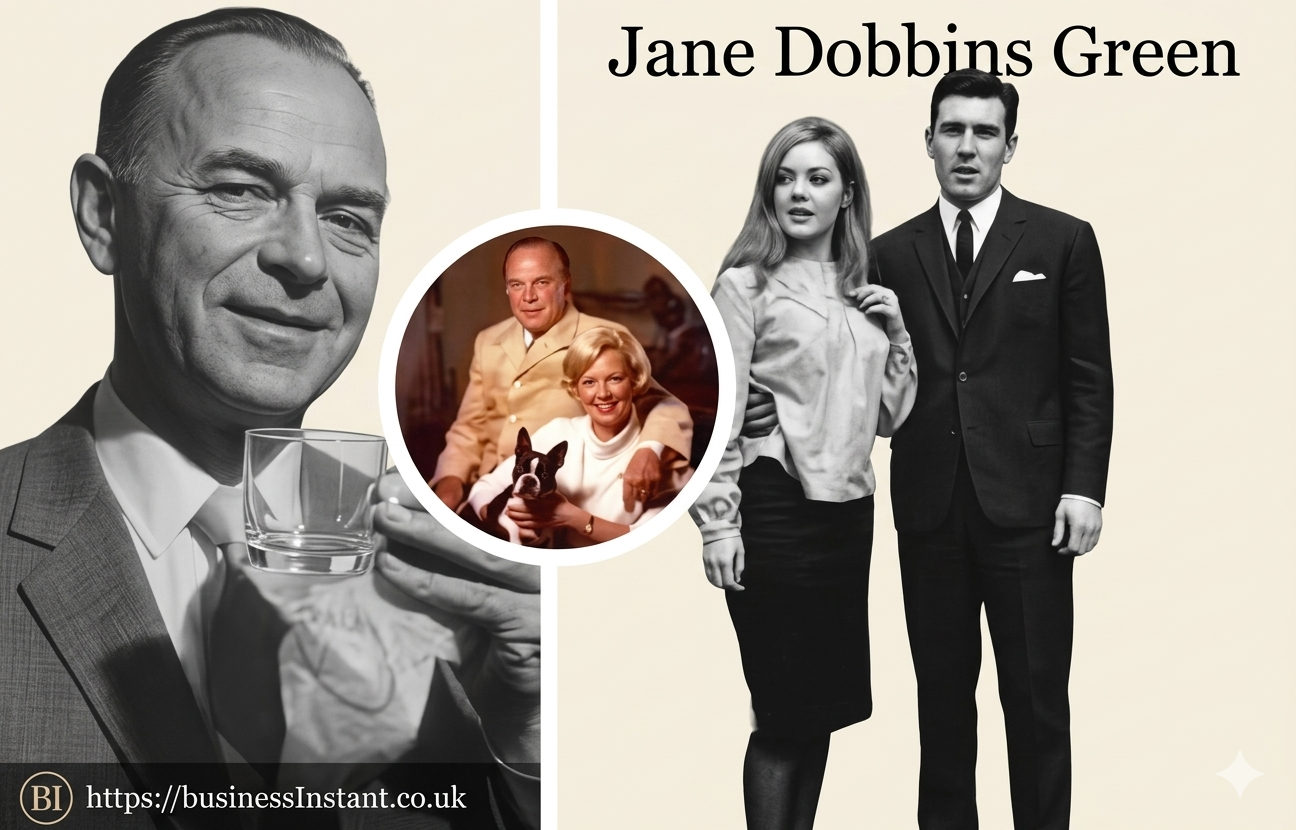
Jane Dobbins Green was a woman whose life, though largely private, intersected with one of the most iconic stories in American business history: the rise of McDonald’s under Ray Kroc. She is most widely known as the second wife of Ray Kroc, the businessman who transformed a small burger chain into a global fast-food empire. Yet, Jane’s story goes beyond this public association; it is a tale of quiet dignity, personal strength, and the choices one makes in the shadow of fame. This article explores her life from birth to death, highlighting the aspects that made her uniquely remarkable, even without the spotlight.
Early Life and Family Background Jane Dobbins Green
Jane Dobbins Green was born in 1911 in Walla Walla, Washington, a small city nestled in the Pacific Northwest of the United States. She was born into a family that valued resilience, integrity, and personal responsibility. Her parents, Warren David Dobbins and Grace Myrtle Duncan Frechette, provided a home environment that emphasized education and moral values, though Jane’s early years were not without challenges.
From a young age, Jane experienced personal loss, including the death of a sibling, which would shape her understanding of life and her capacity for emotional resilience. Additionally, her parents eventually divorced, a significant event in a time when divorce carried social stigma. This experience likely influenced Jane’s perspective on relationships and independence. Her mother remarried, and Jane gained insight into blended family dynamics, navigating these relationships with maturity and discretion.
Despite the lack of detailed documentation about her education or early ambitions, accounts suggest that Jane was intellectually curious and socially adept. She grew up in an era where women often balanced domestic duties with emerging opportunities for professional work, and she displayed qualities of grace, thoughtfulness, and quiet determination that would later define her adult life.
Early Adulthood and Personal Development
In her early adulthood, Jane lived a life that combined modest professional pursuits with personal growth. She worked in administrative and support roles, including positions that may have involved secretarial work or organizational responsibilities. Some accounts suggest she was involved in cultural or artistic environments, potentially working around communities engaged in music, theater, or social coordination. Regardless of the specifics, Jane demonstrated capability, attention to detail, and an ability to maintain composure in professional settings.
Her personal interests, though largely private, likely included reading, arts, and social gatherings within her community. She valued personal relationships and maintained close friendships, even as she navigated a world that was beginning to see the rise of mass media and celebrity culture. Her early life experiences fostered in her a sense of self-reliance and measured discretion, traits that would become central in her later years.
Jane Dobbins Green Marriage to Ray Kroc
Meeting and Marriage
Jane Dobbins Green entered the public narrative through her marriage to Ray Kroc, a man whose business acumen was transforming the American dining landscape. Kroc had already established himself as a successful entrepreneur and was rapidly expanding McDonald’s into a national chain when he met Jane. They were married in 1963, when Jane was in her early 50s, and Kroc was in his early 60s.
Their marriage brought Jane into close proximity with the fast-paced, high-profile world of business and franchise management. However, she did not seek a public role in Kroc’s business affairs. Instead, she maintained a private and supportive presence, choosing to navigate the complexities of being married to a high-profile entrepreneur without stepping into the spotlight.
Life as Kroc’s Wife
During their five-year marriage, Jane balanced her personal life with the demands of being associated with one of the most ambitious men of her time. Kroc’s career required extensive travel, constant business oversight, and engagement with a growing network of franchisees, investors, and executives. Jane’s role, while personal and intimate, remained largely behind the scenes. She provided companionship, emotional support, and stability in a period of tremendous professional activity for her husband.
Although their union did not produce children, Jane’s presence in Kroc’s life represented a stabilizing force. She exemplified quiet dignity in her comportment and decision-making, choosing privacy over public attention. She did not leverage her marriage for social prominence, business involvement, or personal recognition, which was atypical for spouses of high-profile entrepreneurs in mid-20th century America.
Challenges and Divorce
The marriage, while respectful, faced challenges due to Ray Kroc’s growing business ambitions and personal life transitions. Over time, Kroc’s attention shifted elsewhere, ultimately leading to the couple’s divorce in 1968. The dissolution of their marriage was conducted privately and without media spectacle, reflecting Jane’s commitment to discretion and personal integrity.
After the divorce, Jane did not seek public attention, financial gain from Kroc’s success, or involvement in the McDonald’s corporation. Instead, she focused on her own personal life, emphasizing peace and autonomy.
Life After Divorce Jane Dobbins Green
Second Marriage and Later Years
Following her divorce from Ray Kroc, Jane eventually remarried. In 1984, she married Paul D. Whitney, a private individual about whom limited public information exists. This second marriage provided her with companionship and stability, far removed from the pressures of fame or business notoriety. Jane’s later years were spent in Los Angeles, California, where she cultivated personal relationships and lived a life grounded in modesty, reflection, and private fulfillment.
Jane maintained her preference for discretion throughout her life. She did not engage in public philanthropy, write memoirs, or appear in media interviews. Instead, her life reflected the values of self-respect, personal choice, and emotional resilience, emphasizing substance over spectacle.
Death and Burial
Jane Dobbins Green passed away on August 7, 2000, at the age of 88. She was laid to rest at Westwood Memorial Park in Los Angeles, alongside her second husband, Paul Whitney. Her burial site reflects the calm and private life she cultivated — a final affirmation of a life lived largely out of the public eye but full of personal integrity.
Jane Dobbins Green Legacy and Reflection
Jane Dobbins Green’s life offers insight into the experience of individuals whose personal narratives intersect with historical figures. She lived in the shadow of global business fame yet chose to maintain her own identity through privacy and discretion. Her story is not one of corporate achievement or public acclaim, but of quiet strength, composure, and resilience in the face of extraordinary circumstances.
Even as Ray Kroc’s legacy became globally recognized and his third wife, Joan Kroc, assumed a philanthropic and highly public role, Jane’s example demonstrates that influence and significance are not always measured in public recognition. Her life illustrates that dignity, self-determination, and personal values can create a legacy that resonates quietly yet profoundly.
Jane’s presence in history is a reminder that the lives of those adjacent to fame can reflect courage, wisdom, and composure, even without headlines or accolades. Her legacy lies in the choices she made to live authentically, maintain personal integrity, and pursue peace and private fulfillment.
Conclusion
Jane Dobbins Green’s life spans nearly nine decades of the 20th century, intersecting with a transformative period in American business, culture, and society. While she did not seek the spotlight, her life story offers lessons in resilience, discretion, and personal integrity. Jane reminds us that historical significance does not always equate to public fame — sometimes, the most profound impact comes from living authentically and quietly in a world that prizes attention.
Her story is not merely about being the wife of a famous entrepreneur; it is about a woman who chose privacy, dignity, and personal strength in every stage of her life. From her early years in Washington to her final days in Los Angeles, Jane Dobbins Green exemplified the power of living a life true to oneself, leaving behind a legacy that is quietly remarkable.