
Introduction
Mickey Rourke is one of the most distinctive and enigmatic figures in Hollywood, known for his raw intensity, rugged looks, and unforgettable performances. Over the course of a career spanning more than four decades, he has captivated audiences with roles that blend vulnerability and toughness, portraying characters who are often as troubled and complex as he is in real life. His story is a compelling narrative of early fame, personal and professional struggles, reinvention, and a late-career resurgence that cemented his status as a cinematic icon.
Early Life and Upbringing
Philip Andre Rourke Jr., known professionally as Mickey Rourke, was born on September 16, 1952, in Schenectady, New York. He grew up in a working-class environment with his father, a police officer, and his mother, who would later remarry. Rourke’s childhood was marked by instability, including the departure of his father, and a move to Miami, Florida, with his mother. The challenges of his early life instilled a sense of toughness and self-reliance that would later permeate both his career and personal demeanor.
From a young age, Rourke displayed a fascination with physical competition and performance. He was drawn to boxing and began training rigorously as a teenager, developing a reputation as a disciplined and formidable athlete. The early immersion in combat sports not only strengthened his body but also shaped his mental resilience, qualities that he would carry into the high-pressure world of Hollywood.
The Path to Acting Mickey Rourke
Although initially focused on boxing, Rourke’s interest in acting emerged during high school, where he participated in theater productions. He quickly demonstrated a natural talent for embodying characters and conveying emotional intensity. Encouraged by his teachers, he pursued acting more seriously after graduation, moving to New York City to train professionally and seek opportunities in film and television. His early years in the city were marked by struggle, performing odd jobs and attending auditions while honing his craft under various acting coaches.
Rourke’s first screen appearances came in the late 1970s, including a minor role in Steven Spielberg’s 1941. While his early roles were modest, they provided him with invaluable on-set experience and exposure to the mechanics of professional filmmaking. This period laid the foundation for a career that would soon explode with critical and commercial acclaim.
Rise to Fame in the 1980s
The 1980s were a defining decade for Rourke, establishing him as one of Hollywood’s most promising young actors. His breakout roles in Body Heat (1981) and Diner (1982) showcased his charisma, intensity, and naturalistic acting style. Critics praised his ability to embody complex emotions and deliver nuanced performances that resonated with audiences.
Rourke’s early success continued with roles in Rumble Fish (1983), The Pope of Greenwich Village (1984), and Year of the Dragon (1985). Each performance highlighted his versatility and willingness to take risks, often portraying morally ambiguous or emotionally scarred characters. By the mid-1980s, Rourke had solidified his status as both a commercial and critical favorite, admired for his willingness to confront difficult material and challenge conventional Hollywood archetypes.
Iconic Roles and Sex Symbol Status
In 1986, Rourke starred in 9½ Weeks, a sensual drama that propelled him to international fame. His performance as a mysterious, intense lover captured the imagination of audiences worldwide and cemented his status as a sex symbol. That same decade saw him take on memorable roles in Angel Heart (1987) and Barfly (1987), collaborating with renowned directors and actors and demonstrating his commitment to challenging, emotionally demanding projects.
These roles established Rourke as a unique presence in Hollywood — someone who combined physicality, emotional depth, and a raw, unpolished charisma that few actors could replicate. He was celebrated not only for his talent but also for his authenticity and willingness to take risks in his career choices.
Career Decline and Personal Struggles
Despite his early success, Rourke’s career trajectory began to falter in the late 1980s. Conflicts with studio executives, dissatisfaction with typecasting, and a desire for creative freedom led him to step away from mainstream Hollywood roles. During this period, Rourke’s personal life became increasingly tumultuous. He faced financial difficulties, legal issues, and struggles with substance use, all of which contributed to a temporary decline in his professional visibility.
Seeking a new outlet, Rourke returned to boxing in the early 1990s, pursuing a professional career as an adult. He fought in multiple international bouts, earning victories but also sustaining significant injuries. The physical toll of boxing, combined with cosmetic surgeries, contributed to the distinctive facial features that would later define his rugged appearance. While his boxing career was relatively short-lived, it reinforced his public image as a man of physical and emotional intensity.
Mickey Rourke Return to Acting
After retiring from boxing, Rourke gradually returned to acting, taking on supporting roles in independent films such as The Rainmaker (1997), Buffalo ’66 (1998), and Animal Factory (2000). These roles allowed him to rebuild his reputation and reestablish connections within the industry. While not immediately returning to leading-man status, Rourke’s performances were noted for their depth and commitment, earning him respect among filmmakers and audiences alike.
The early 2000s saw Rourke take on roles that showcased his maturity as an actor, blending the ruggedness developed through years of personal and professional challenges with a refined understanding of character psychology. His return to the screen was gradual, but it set the stage for one of the most acclaimed periods of his career.
The Wrestler and Career Renaissance
Rourke’s defining moment came in 2008 with Darren Aronofsky’s The Wrestler, in which he portrayed Randy “The Ram” Robinson, an aging professional wrestler clinging to past glory. The role drew heavily on Rourke’s own experiences, merging personal history with on-screen performance. Critics lauded his portrayal for its authenticity, vulnerability, and emotional resonance.
His performance earned Rourke a Golden Globe Award, a BAFTA, and an Academy Award nomination for Best Actor, marking the pinnacle of his career. The Wrestler reestablished him as a major talent in Hollywood and demonstrated the power of resilience, reinvention, and dedication to one’s craft.
Subsequent Work and Mainstream Roles
Following the success of The Wrestler, Rourke appeared in a variety of mainstream and independent projects. He took on the role of Whiplash, the antagonist in Iron Man 2 (2010), bringing his characteristic intensity to the Marvel Cinematic Universe. He also appeared in The Expendables (2010), Immortals (2011), and Sin City: A Dame to Kill For (2014), demonstrating versatility across genres including action, fantasy, and noir.
Rourke’s later film work often capitalized on his rugged appearance and ability to portray complex, morally ambiguous characters. He balanced blockbuster projects with smaller, independent films, maintaining both visibility and artistic credibility.
Personal Life Mickey Rourke
Rourke’s personal life has been marked by high-profile relationships and public scrutiny. He has been married twice — to actress Debra Feuer and model Carré Otis — both marriages ending in divorce. He has faced legal issues, including arrests and controversies, as well as challenges related to substance abuse and financial management. Rourke has often spoken candidly about these experiences, acknowledging personal mistakes while emphasizing his ongoing efforts toward personal growth and redemption.
Boxing Legacy Mickey Rourke
Throughout his life, boxing remained a constant presence. Rourke’s dedication to the sport, both in his youth and as an adult professional, shaped his physicality, discipline, and public persona. His 2020 return to the ring at age 62 made headlines, demonstrating his enduring commitment to the sport and his willingness to challenge himself physically and mentally, even later in life.
Recent Controversies Mickey Rourke
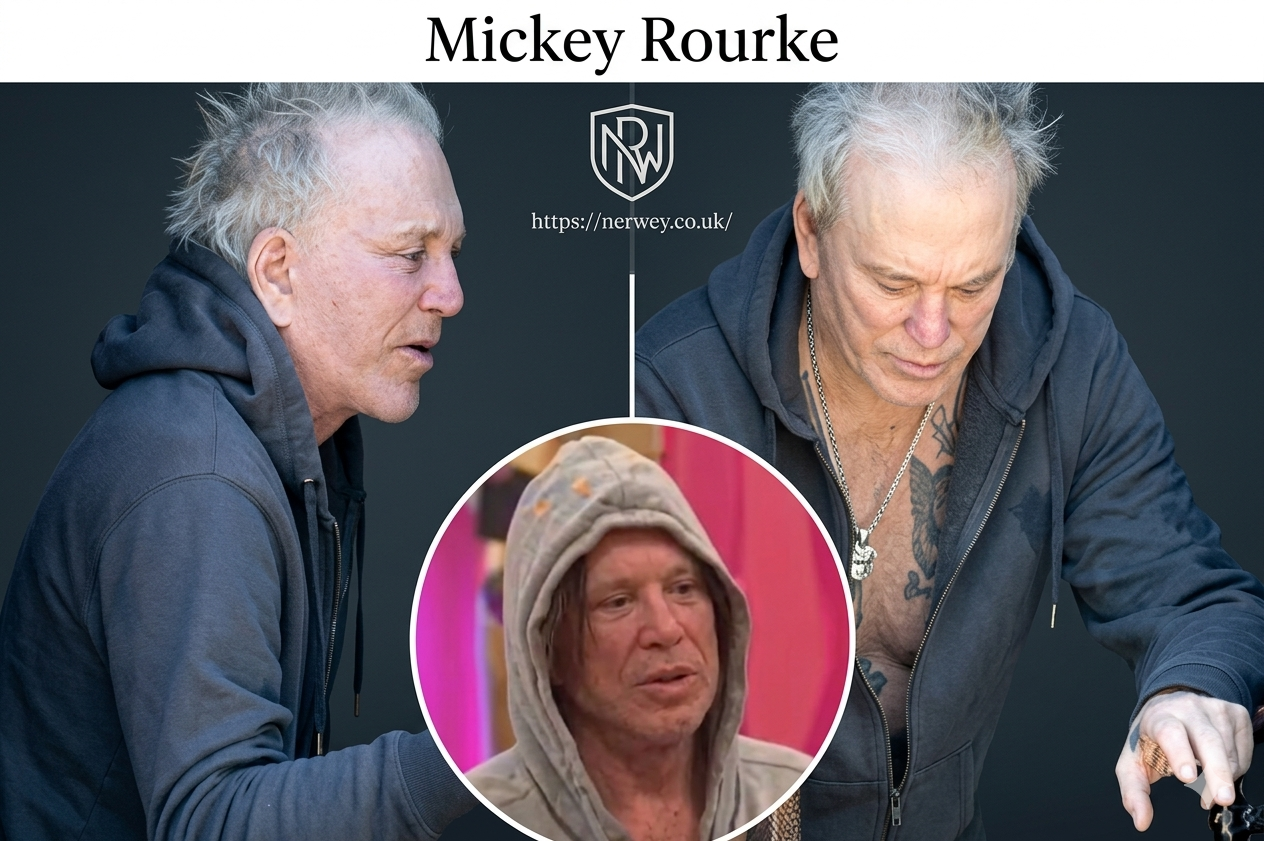
In the mid-2020s, Rourke faced renewed public scrutiny. He participated in reality television and media appearances that sometimes sparked controversy due to his candid manner and outspoken personality. Additionally, he confronted challenges related to housing and financial disputes, which were widely covered in the press. Despite these issues, Rourke remained focused on his career and artistic pursuits, demonstrating resilience and independence.
Legacy and Cultural Impact
Mickey Rourke’s legacy is defined by his ability to transform personal struggle into compelling performances. His career embodies the tension between raw, sometimes volatile energy and artistic integrity. From his early roles in the 1980s to his career renaissance with The Wrestler, Rourke has consistently challenged Hollywood norms and embraced complex characters.
He is celebrated not only for his talent but also for his authenticity, willingness to confront personal demons publicly, and ability to reinvent himself artistically. His work continues to inspire both actors and audiences, offering a narrative of perseverance, intensity, and redemption.
Conclusion
Mickey Rourke’s life and career are emblematic of the highs and lows of Hollywood. He has navigated early fame, personal struggles, professional setbacks, and remarkable comebacks with a distinctive blend of charisma, vulnerability, and resilience. From his early days as a promising young actor to his reinvention as a critically acclaimed performer in The Wrestler, Rourke has left an indelible mark on cinema and culture. His story is a testament to talent, perseverance, and the enduring power of reinvention in the face of adversity.